Maldives travel guide: resorts, local islands and how it all works
A first trip to the Maldives: resort or local island, flights, seaplanes and speedboats, entry rules, money, taxes, local laws and what to pack.
This page contains affiliate links. If you buy through them, Barefoot and Blue may earn a small commission at no extra cost to you.
Shopping in United States ($)
This Maldives travel guide is for a first trip: how the islands work, how to choose between a resort and a local island, getting there and between islands, money and taxes, the local rules, staying safe and what to pack. Every fact was checked in November 2026 against the source that sets it: Maldives Immigration, the UK Foreign Office (FCDO), the airport, the seaplane operator, and the resorts' and guesthouses' own websites. The entry rules are the same for UK and US passports.
The Maldives at a glance
- Currency
- Maldivian rufiyaa (MVR), about 15.5 to the US dollar; resorts and guesthouses charge in dollars
- Language
- Dhivehi; English is widely spoken in tourism
- Plugs
- Type G (the UK three-pin), 220 to 240V
- Time
- UTC+5 all year: 5 hours ahead of London and 10 ahead of New York in winter
- Visa
- 30 days on arrival for UK and US passports, nothing to apply for in advance
- Before you fly
- The free IMUGA traveller declaration, in the 96 hours before you land
- Best months
- January to April, the dry season
- Ambulance
- 102
How the Maldives works
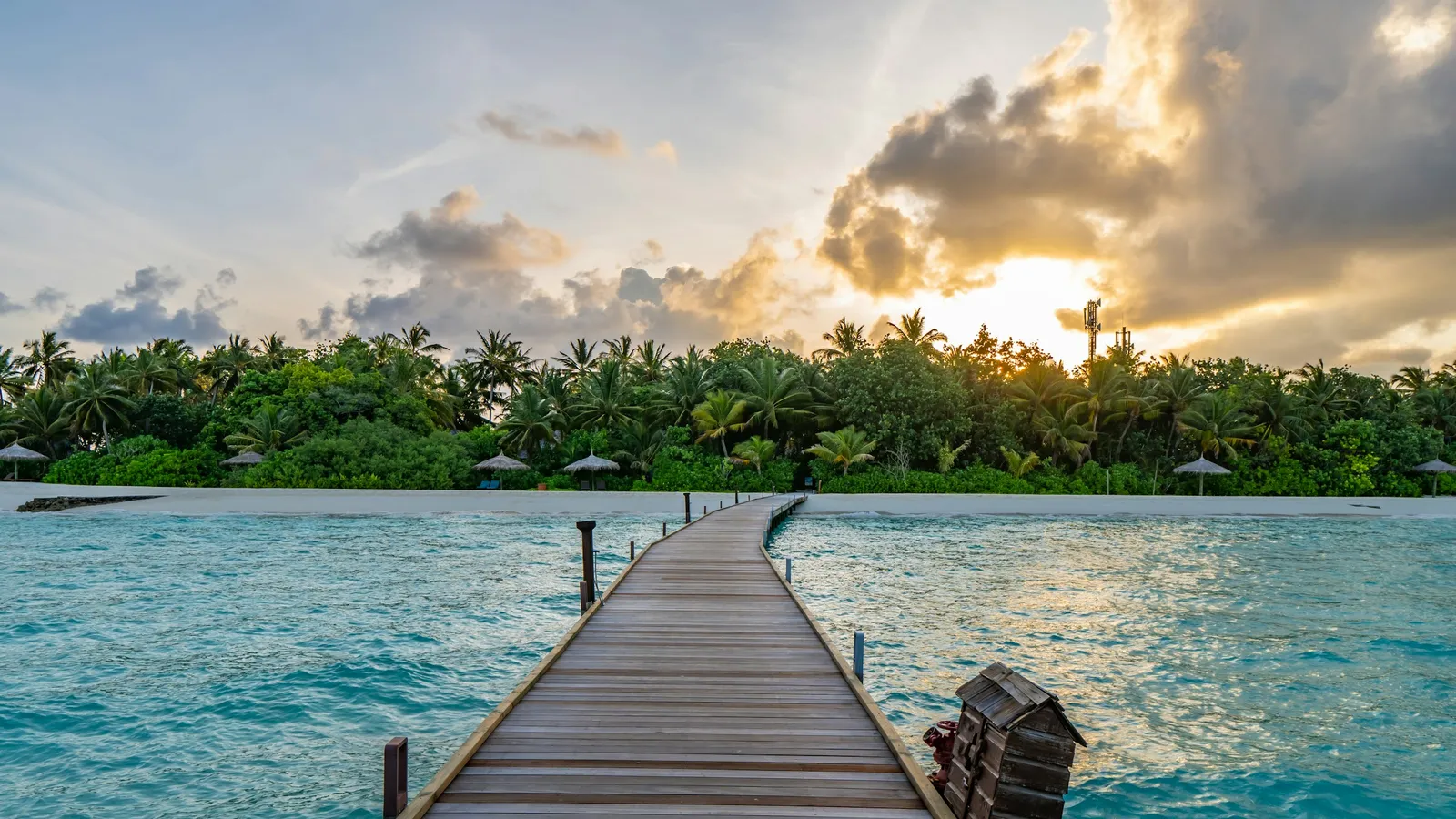
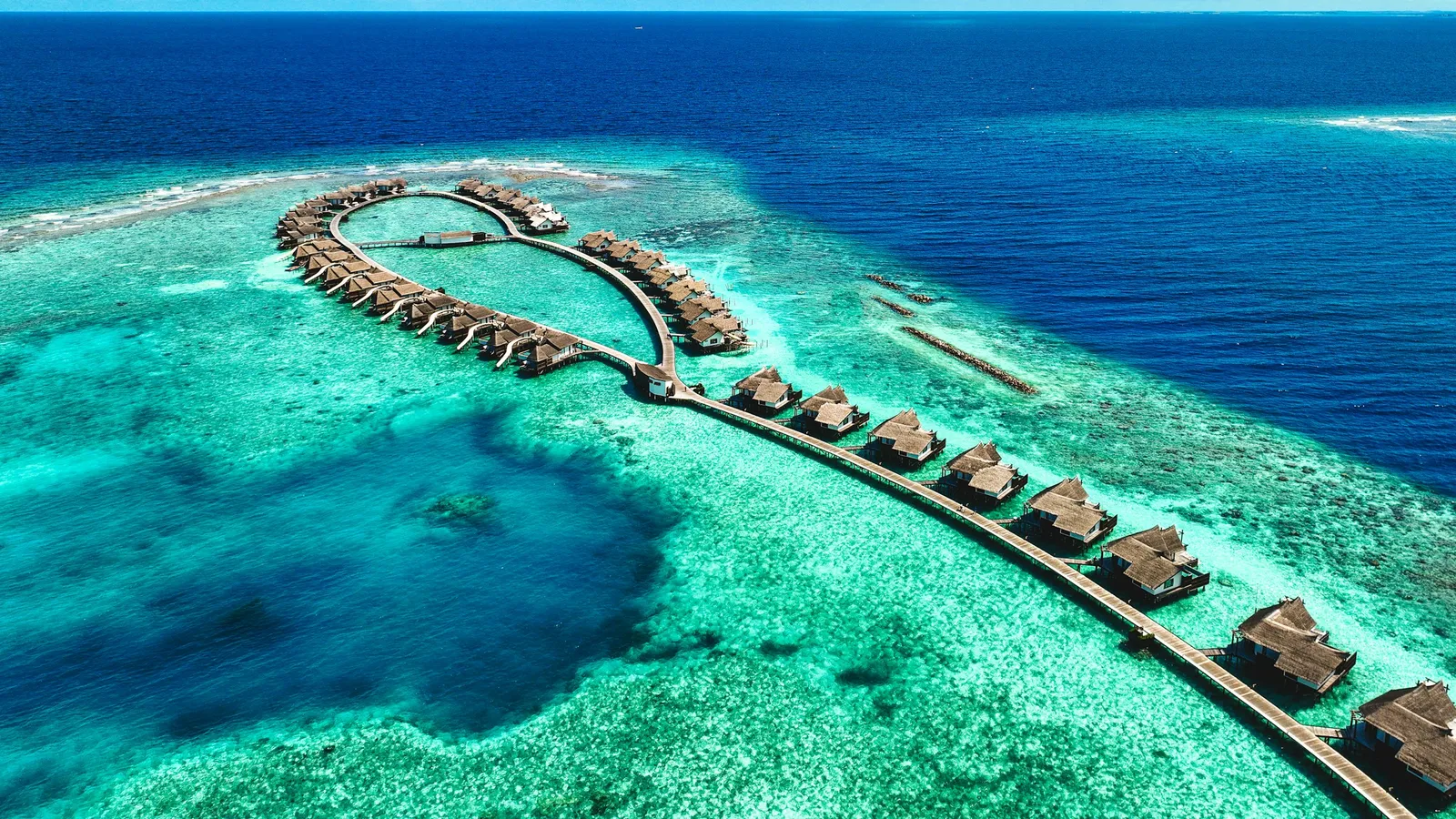
The Maldives is 1,192 coral islands grouped into 26 atolls, strung out over 871 km of the Indian Ocean. Only about 200 of them are inhabited. A few islands in each atoll are given over to resorts: Visit Maldives, the official tourism site, lists 175 resorts, 843 guesthouses on local islands and 158 liveaboard boats.
That makes for two quite different holidays:
- A resort island. The resort is the island: the beach, the restaurants and bars, the dive centre and the reef. Alcohol is served, and swimwear is fine on the beach and by the pool. You pay resort prices for everything, because there is nowhere else to go.
- A local island. Maldivians live here, and guesthouses and small hotels stand among their homes, mosques and schools. Rooms cost far less, and the sea is the same. There is no alcohol, and away from the beach set aside for tourists you dress modestly.
You can also split a week between the two. Which islands suit whom, with nine places to stay from a Maafushi hotel to an adults-only seaplane resort, is in where to stay in the Maldives. Six local islands near Malé, the ferries, the taxes and what a cheaper week costs are in the Maldives on a budget.
The atolls you will hear about
- North and South Malé Atolls surround the capital and the airport. Resorts here are 10 minutes to an hour away by speedboat, and so is Maafushi, the local island with the most guesthouses. North Malé also has the best-known surf breaks, such as Cokes at Thulusdhoo.
- Ari Atoll, to the west, is a short seaplane flight or a longer speedboat ride: Niva Kuramathi, in the north of Ari, is 20 minutes by seaplane or 75 to 90 minutes by boat. Whale sharks are seen all year in the South Ari Marine Protected Area, and Ari's local islands include Dhigurah, Thoddoo and Ukulhas.
- Baa Atoll has been a UNESCO biosphere reserve since 2011. In its Hanifaru Bay, manta rays gather to feed from May to December, sometimes more than 150 at a time, and scuba diving there is banned.
- Lhaviyani, Noonu and the far north and south are further out, by seaplane, or by a domestic flight and a boat.
Getting there
From the UK, British Airways flies non-stop from London Heathrow, and Virgin Atlantic runs seasonal non-stop flights from Heathrow too. Many more routes take one stop, through Dubai, Doha, Abu Dhabi, Istanbul or Colombo, with Emirates, Qatar Airways, Etihad, Turkish Airlines and SriLankan Airlines.
From the US, there are no non-stop flights: the usual routes connect in the Gulf or Istanbul with the same airlines.
Everyone arrives at Velana International Airport, on Hulhulé island next to the capital, Malé.
Entry rules. Every tourist, UK and US passport holders included, gets a 30-day visa on arrival, with nothing to apply for beforehand. At immigration you need:
- a passport with a machine-readable zone, valid for at least a month after you arrive
- a confirmed return or onward ticket
- a prepaid, confirmed booking at a registered resort, hotel, guesthouse or liveaboard
- enough money for your stay
- the free IMUGA traveller declaration, filled in online in the 96 hours before you land, one for each traveller including children; there is a departure declaration too
- a yellow fever certificate, if you arrive from or have recently passed through a country with yellow fever
Customs. Don't pack alcohol: bottles bought on the way, duty free included, are confiscated at the airport. It is illegal to bring in pork, idols for worship or anything else deemed contrary to Islam, pornography is banned, and drug offences are punished severely: even a small amount of cannabis can lead to arrest. The tobacco allowance is 200 cigarettes, 25 cigars or 250 g of tobacco.
Getting around
From the airport to Malé, the public ferry leaves every 15 minutes from 5.30am to midnight and costs MVR 15 (about $1). Taxis run around the clock to Malé, over the bridge, and to Hulhumalé, and RTL buses run to both. Dhiraagu and Ooredoo, the two mobile networks, sell local SIM cards and eSIMs at the airport.
Speedboats take you to the resorts and local islands of North and South Malé Atolls. Your resort or guesthouse arranges the boat, and resorts have staff in the arrivals hall to meet you.
Seaplanes fly to resorts further out. Trans Maldivian Airways (TMA), which says it has the world's largest seaplane fleet, serves more than 80 resorts from its seaplane terminal by the airport. Three things to know:
- Seaplanes fly only between sunrise and sunset. TMA advises landing by 3.30pm to reach your resort the same day; land later and you spend the first night near the airport, in Malé, Hulhumalé or on the airport island.
- The baggage allowance is 25 kg a person, checked and hand luggage together. Extra weight costs $5 a kilo, and no single bag may weigh more than 32 kg.
- Transfers are booked through your resort and cost extra. Conrad Maldives Rangali Island, for example, lists its seaplane at $700 an adult.
Domestic flights with Maldivian, Manta Air and Villa Air link Velana with a dozen other airports, and resorts in the outer atolls finish the journey by speedboat.
Public ferries link Malé with many local islands for a few dollars, but they are slow and infrequent, and many don't sail on Fridays. Maafushi takes about an hour and 45 minutes by ferry, or about 30 minutes by shared speedboat for around $25.
Money, taxes and tipping
The rufiyaa is the local currency, about 15.5 to the US dollar in November 2026, but resorts and guesthouses quote their prices in US dollars, and major cards are widely accepted. Carry some US dollars in small notes for tips and island cafés.
Read what a price includes. Resort rates are often quoted before three additions: a 10% service charge, 17% GST and the green tax, a government charge of $12 a person a night at resorts and larger hotels and $6 at guesthouses and small hotels. The service charge and GST alone add more than a quarter to the bill.
Tipping isn't compulsory, because the 10% service charge is already on the bill. If you want to thank a room attendant, a guide or a boat crew, US dollars in cash are the easiest to give.
Local islands: the rules
The Maldives is a Muslim country, and on inhabited islands, Malé included, its laws and customs apply to visitors too:
- No alcohol. It is sold only on resort islands, liveaboards and at the Hulhulé Island Hotel on the airport island. Having or drinking it anywhere else can get you arrested and deported.
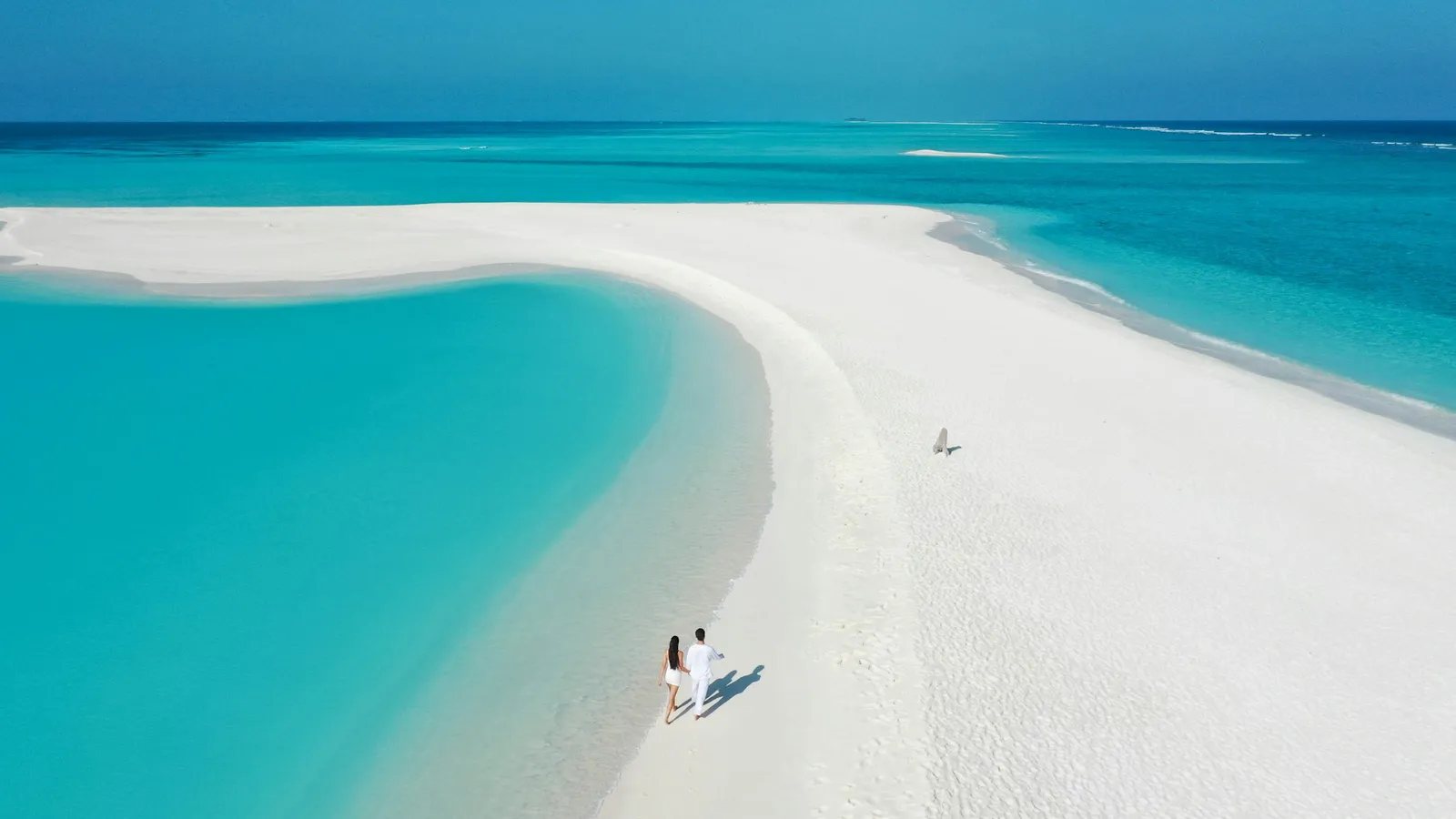
- Dress. Away from resorts, including on beaches used by locals, the FCDO advises men and women to cover their shoulders, avoid short or tight shorts, and keep arms and upper legs covered when bathing. Some local islands set aside a beach for tourists, often called the bikini beach, where swimwear is fine: ask your guesthouse where it is.
- Topless sunbathing and nudity are not allowed anywhere, resorts included.
- Ramadan. In 2027 it is expected to run from about 8 February to 9 March. Outside resorts, don't eat, drink or smoke in public in the daytime.
- Fridays. The weekend is Friday and Saturday, when banks, offices and many shops close.
- Religion and the law. Practising any religion other than Islam in public is illegal, and so are same-sex relations. Taking coral or tortoiseshell out of the country is illegal too.
Staying safe and well
The FCDO says crime is low on resort islands, though you shouldn't leave valuables on the beach or in an unlocked room. In Malé and Hulhumalé there is gang violence, including knife crime, so avoid empty streets on foot after dark, and stay away from protests. Terrorist attacks can't be ruled out.
The sea is the bigger risk. Strong tidal currents have pulled swimmers away from the shore and drowned them, so ask resort staff where it is safe to swim, swim only in supervised areas or areas marked safe, and get out if something doesn't feel right. There have been fatal propeller accidents in the South Ari Marine Protected Area and at nearby whale shark sites: keep well away from boats when you snorkel, and check that small excursion boats carry life jackets.
The only fully equipped hospitals are in Malé and Hulhumalé, and some resorts are hours from emergency treatment, though most have a doctor or a clinic. Buy travel insurance that covers medical evacuation, and use insect repellent, as dengue is a risk. The ambulance number is 102. US travellers should also read the State Department's advice for the Maldives at travel.state.gov.
What to pack
A Maldives trip needs less than most: swimwear, light clothes, one smarter outfit for the evening (many resort restaurants ask for smart casual at dinner) and plenty of sun protection, as daytime highs are 30 to 32°C (86 to 90°F) in every month. Three things are particular to the Maldives:
- Cover-ups for Malé and local islands: something over the shoulders and knees, and a long-sleeved rash vest for swimming off a beach used by locals.
- Weight. A seaplane transfer means 25 kg a person including hand luggage, so weigh your bags at home.
- A Type G adaptor if you are coming from the US. UK plugs fit as they are.
What to pack for the Maldives
Shopping in United States ($)
- Amazon.comSee it on Amazon.com
Mineral sun cream, SPF 50
Average daytime highs at Malé are 30 to 32°C in every month, so sun cream is an everyday item.
- Amazon.comSee it on Amazon.com
Women's long-sleeved rash vest
Covers shoulders and arms in the water, as the FCDO advises on beaches used by locals.
- Amazon.comSee it on Amazon.com
Snorkel mask and snorkel
House reefs and guesthouse boat trips are snorkelled, so a mask of your own is ready for every swim.
- Amazon.comSee it on Amazon.com
Mineral sun cream, SPF 50
Average daytime highs at Malé are 30 to 32°C in every month, so sun cream is an everyday item.
- Amazon.comSee it on Amazon.com
Men's long-sleeved rash vest
Keeps the sun off your back on long snorkels and covers your arms for swimming off a local island.
- Amazon.comSee it on Amazon.com
Snorkel mask and snorkel
House reefs and guesthouse boat trips are snorkelled, so a mask of your own is ready for every swim.
Trips worth booking
Trips worth booking
3 items- South Ari whale shark trip GetYourGuideWhale sharks are seen all year in the South Ari Marine Protected Area; keep well clear of boat propellers in the water.
- Snorkelling and sandbank trip from Maafushi GetYourGuideDay trips from Maafushi combine reef snorkelling, dolphin spotting and lunch on a nearby island.
- Malé city walking tour GetYourGuideMalé's Old Friday Mosque was built in 1658 from carved coral stone, and its minaret in 1675.
If your flight home leaves in the evening, Malé fills a few hours: the Old Friday Mosque (Hukuru Miskiy), built in 1658 from carved coral stone, with its minaret from 1675; Sultan Park and the National Museum; and the fish and produce markets on the northern waterfront. Dress for the city, with shoulders and knees covered.
Plan the rest of your trip
- Where to stay in the Maldives: local islands, speedboat and seaplane resorts, and nine places to stay
- Where to eat in the Maldives: meal plans, two undersea restaurants, Malé and the local islands
- The best time to visit the Maldives: the two monsoons, month by month, with the 2027 dates
- Maldives travel questions: costs, alcohol, bikinis, tipping, safety and a week's budget